


Case Study — Patent Operations
Patenting Workflows for Lawyers & Inventors
Senior Product Designer owned the end-to-end experience of
Impact
15%
increase in speed from patent submission to approval
33%
reduction in tech debt and implementation timelines, incorporating design thinking into the SDLC, transforming the engagement from feature production to strategic product design
#1
The business now supports the leading number of AI-patents globally
User Challenges
01
Legal Council
Lawyers struggle with visibility between in-house council and outside council, delaying patent approval.
02
Finance
Finance spends significant time identifying trends in data, resulting in low confidence in predictions.
03
Inventors
Inventors are dropping off from poor submission UX, yet the business drives to support an increase in AI patents.
Design Process
01
Understand
Hopping directly into this project, I learned the patenting workflows on the fly by asking strategic questions and noting industry vocabulary during calls to research later.
02
Validate
Without access to users due to NDAs and strict compliance, I defined quantitative data points to inform workflow bottlenecks and information architecture hierarchy issues.
03
Discover
I met weekly with the Head of Technology to understand current lawyer pain points and business KPIs to prioritize design sprint focus areas.
04
Align
Designing for the Salesforce platform, I collaborated with Engineers to advocate for custom components when necessary, and leverage standard components when possible to stay within budget and time constraints.
05
Design
I collaborated with the lead engineer to advocate for design decisions and achieve alignment prior to meeting with the client.
Solution
Awards Portal
Designed the Awards portal from scratch to increase patents by gamifying patenting for Inventors.
Finance App
Completely redesigned the finance application to improve proactive predictive analytics, including graphs and modernizing the interface.
Lawyer Apps
Designed incremental improvements to the lawyer applications to streamline workflows, leveraging Material Design.
Experiences
Finance
Problem
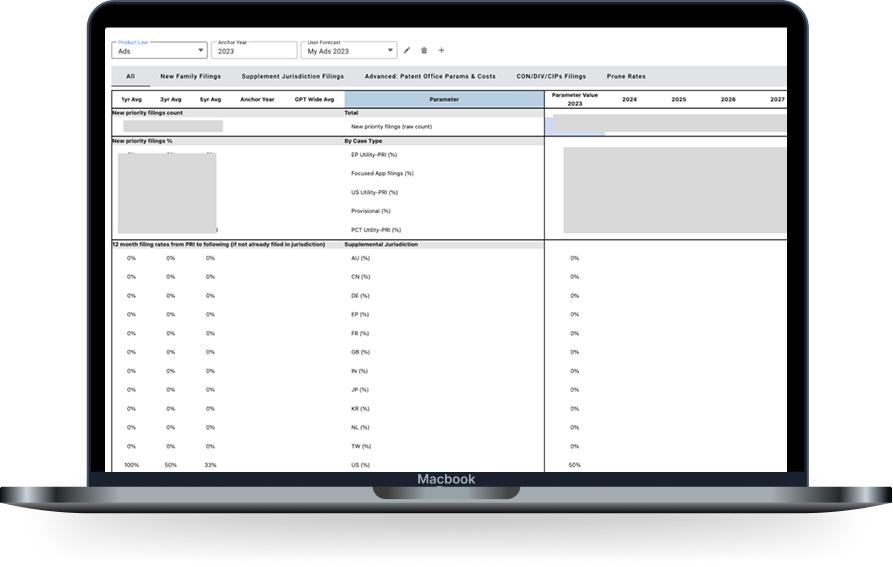
After redesigning some of the lawyer experience, the client asked me to look at the finance application and suggest improvements. In discovery, I found that finance spends significant time filtering, searching, and running reports to identify trends in data, as well as entering data.
Solution
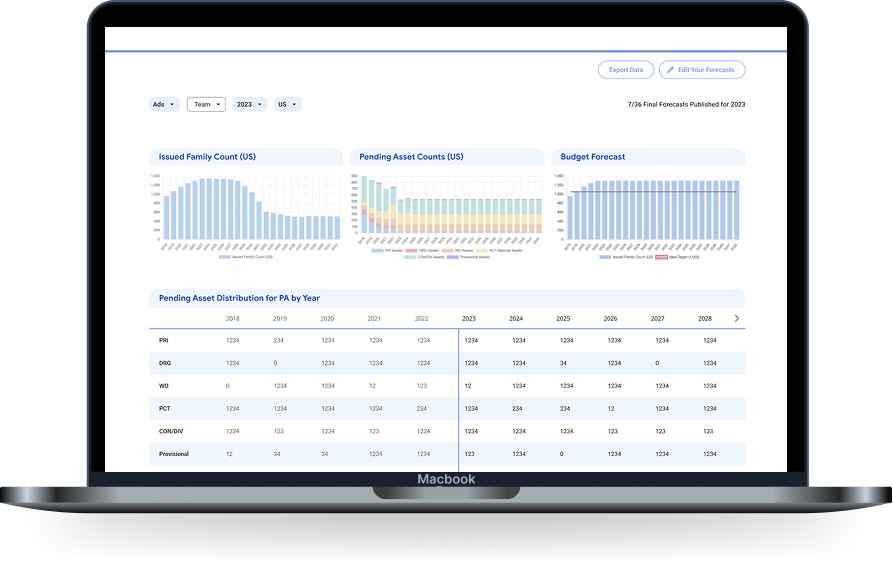
I suggested a redesign of the finance application to improve proactive predictive analytics, including graphs and modernizing the interface with the clients branding.
Alignment
By proposing the table component I designed for the lawyer application, I was able to make a huge improvement to the data table with minimal pushback from engineers.
Design
Designing graphs made predictions faster, and small changes like alternating row colors made the dense data easier to scan. I also designed a single button that switches the entire view into an editable state. This got pushback since Salesforce's standard is inline editing, where you hover to reveal a pencil icon per field. My concern was that those icons would constantly interrupt users who were just trying to read the data. Once I framed it as two distinct journeys, viewing versus editing, the team came around and we pushed for the custom pattern.
Before
After
Legal Council
Problem
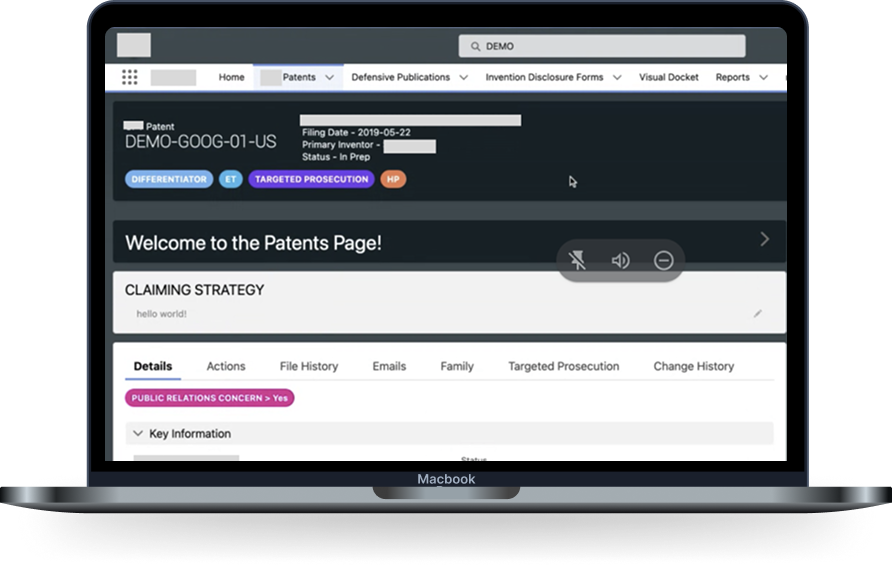
Lawyers struggle with visibility between in-house council and outside council, delaying patent approval. They aren't notified when changes are made, making the application more of a database than an interactive experience.
Solution
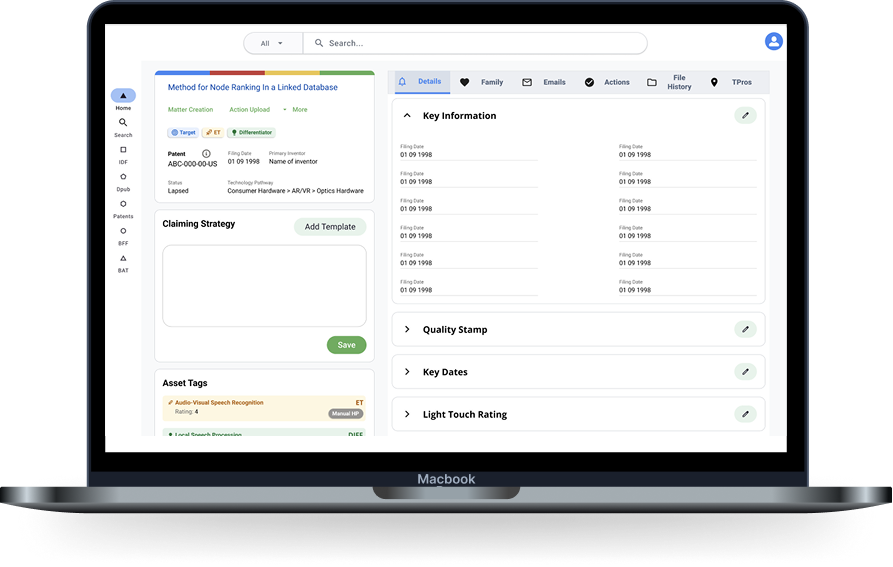
I redesigned patent detail page, patent search experience, data entry workflows, and a homepage that reduced decision fatigue on next best actions.
Alignment
Since the best UX required changing much of what the engineers had previously built, I kept the animated four color header bar in the redesign as a nod to their creativity. Showing respect for their previous ideas kept the team aligned on creating the best experience for our users, even with many of the changes I suggested.
Design
The current design utalized many random colors, fonts, and font styles with no previous design governance. I developed the design system I created for another employee application, now with a clear font heirarchy and color pallet in additon to components, to guide future decisions. I developed this design system to work across employee tools, bringing the company branding into complex systems while keeping workflows simple.
Before
After
Inventors
Problem
Inventors are dropping off from poor submission UX, yet the business drives to support an increase in AI patents.
Solution
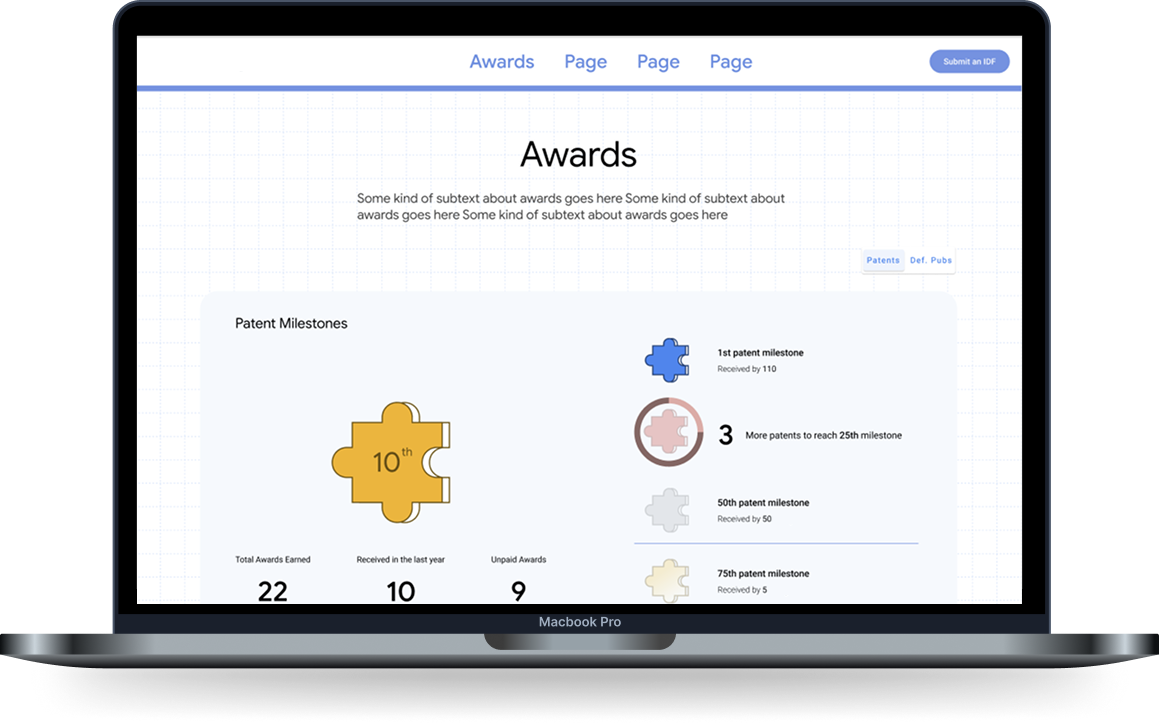
Designed the Awards portal from scratch to increase patents by gamifying patenting for Inventors.
Alignment
After presenting the initial design to the head of technology, I learned that patents and defensive publications we distinctly different and I needed to display different meta-data. This informed a toggle between different cards in my second iteration, as well as creating different card styles in the lawyer application. When working in complex domains and learning on the fly, these type of industry nuances are a primary driver of feedback.
Design
I designed an interactive experience based on the physical puzzle piece awards that inventors receive at certain milestones to incentivize patent submissions to incentivize patent submission.
Learning
After this project, I understand the productive negotiation between designers and developers. We worked together to establish trust, understand and adapt to various technical constraints and user needs, and make trade offs as needed.